Basements can be tricky for robot vacuums: low light, mixed flooring, thresholds, dust, and tight furniture layouts all make navigation harder. The best picks combine reliable mapping, strong suction, and a compact body that can handle everyday debris.
Below, we’ve focused on models that make sense for basement use, from slim vacuums for low-clearance spaces to self-emptying options for busier homes.
Best 10 Robot Vacuum for Basements Picks for 2026
Auto-Empty Combo Pick
Roomba 105 Combo with LiDAR and AutoEmpty Dock

- Self-empties up to 75 days
- Vacuums and mops in one unit
- Avoids carpets while mopping
Best For: Basements with hard floors, rugs, and low-maintenance cleaning
Ultra-Thin Budget Pick
eufy 11S MAX Super Thin, Quiet Vacuum

- 2.85-inch low profile
- Quiet, simple operation
- No Wi-Fi or app control
Best For: Quiet basement vacuuming around low furniture
Set-and-Forget Cleaner
Roomba Combo 2 Essential Auto Empty

- Vacuums, mops, and self-empties
- Up to 120 minutes runtime
- Neat-row navigation with stair sensors
Best For: Routine basement cleaning with minimal hands-on upkeep
Heavy-Duty Mapping Pick
Shark AI Ultra with Matrix Clean

- Strong suction on carpet and hard floors
- Matrix Clean uses grid-style multiple passes
- Bagless self-emptying base for 60 days
Best For: Bigger basements with pets, dust, and mixed flooring
Smart Deep-Clean Pick

- 70X power-lifting suction
- LiDAR mapping with anti-fall sensors
- Recharge-and-resume cleaning
Best For: Finished basements with mixed flooring and stairs to avoid
Hands-Free Wet-Dry Option
eufy E25 Robot Vacuum and Mop Combo

- 20,000 Pa suction and roller mopping
- Self-empties, self-washes, and auto-refills
- Handles thresholds, corners, and baseboards
Best For: Basements that need both vacuuming and mopping with minimal upkeep
Budget Mapping Pick
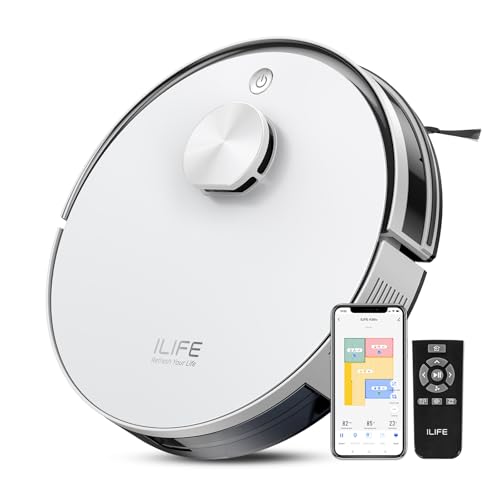
- Up to 10,000 Pa suction
- LiDAR mapping with no-go zones
- Vacuum-only design with dual anti-tangle brushes
Best For: Budget buyers wanting mapped vacuuming in finished basements
Basement Deep-Clean Pick
Roborock Q7 M5 Robot Vacuum and Mop Combo

- 10,000Pa suction for dust, debris, and pet hair
- LiDAR mapping with app controls and no-go zones
- Vacuum and mop in one pass with adjustable water flow
Best For: Basements with mixed flooring that need strong suction and smart navigation
Low-Maintenance Basement Choice

- 8,000Pa suction with dual anti-tangle brushes
- Self-emptying base holds debris for up to 90 days
- LiDAR mapping with 5-map memory and long runtime
Best For: Large basements where low-maintenance cleaning matters most
Budget-Friendly Basement Cleaner
ROPVACNIC Robot Vacuum and Mop Combo

- 5,200Pa suction with 3-point cleaning
- Adjustable electric mopping with four water settings
- App, remote, and voice control in a compact design
Best For: Basements with hard floors or low-pile carpet on a simpler budget
Auto-Empty Combo Pick – Roomba 105 Combo with LiDAR and AutoEmpty Dock
If you want a robot vacuum for basements that can handle mixed flooring and keep maintenance low, the Roomba 105 Combo is built around convenience. It vacuums and mops, maps with LiDAR, and automatically avoids carpets while mopping, which is especially useful in basement spaces with area rugs and hard floors.
Best For: Basement owners who want a self-emptying vacuum-mop for hard floors and rugs.
Pros:
- Self-empties for up to 75 days into an AutoEmpty dock with allergen-trapping bags.
- 70X more power-lifting suction plus edge-cleaning and multi-surface brush support.
- LiDAR mapping, obstacle avoidance, and stair-fall sensors help it navigate complex rooms.
- Automatically avoids carpets while mopping, so rugs stay dry without extra setup.
Cons:
- Requires a 2.4 GHz network for setup and operation.
- Battery life is listed at 100 minutes, so larger basement layouts may need more than one run.
This is a strong fit if your basement needs a hands-off cleaner that can move between vacuuming and mopping. Its smart navigation and self-emptying dock make it a practical choice for spaces that collect dust but also include rugs or carpeted sections.
Ultra-Thin Budget Pick – eufy 11S MAX Super Thin, Quiet Vacuum
For a robot vacuum for basements where low clearance matters, the eufy 11S MAX is easy to place under furniture thanks to its 2.85-inch profile. It focuses on simple, quiet vacuuming with adaptive suction, making it a straightforward option for finished basements with hard floors or medium-pile carpet.
Best For: Finished basements with low furniture and a need for quiet, simple vacuuming.
Pros:
- Super-thin 2.85-inch design helps it reach tight spaces and low-clearance furniture.
- Quiet operation makes it less disruptive for basement use.
- BoostIQ adjusts suction quickly for different floor types.
- Self-charging and drop-sensing features add basic convenience and safety.
Cons:
- No Wi-Fi or app control; it uses only the remote and onboard buttons.
- It is vacuum-only, so it will not mop basement floors.
If you want an uncomplicated basement cleaner, this model keeps the feature set simple and the profile low. It is best when you care more about easy everyday vacuuming than advanced mapping or smart-home control.
Set-and-Forget Cleaner – Roomba Combo 2 Essential Auto Empty
When shopping for a robot vacuum for basements, the Roomba Combo 2 Essential stands out for doing the basics well without much setup. It vacuums, mops, and self-empties, while its neat-row navigation and stair sensors make it a practical fit for finished basement floors that need regular upkeep.
Best For: Basement spaces that need a simple vacuum-mop with automatic emptying.
Pros:
- Vacuums, mops, and self-empties into a 60-day enclosed bag.
- 4-stage cleaning system includes edge cleaning for dust-prone corners.
- Up to 120 minutes of runtime with recharge-and-resume support.
- Multiple suction and water-level settings allow more control over cleaning.
Cons:
- Requires a 2.4 GHz network for setup and operation.
- Surface recommendation is hard floor, so it is less specialized for carpet-heavy basements.
This model is a good choice if you want a basement robot that can cover routine debris, light mopping, and maintenance with minimal attention. Its self-emptying base and app-based scheduling make it especially convenient for frequent cleanups.
Heavy-Duty Mapping Pick – Shark AI Ultra with Matrix Clean
If your basement needs a robot vacuum for basements that can handle deeper cleanups and larger spaces, the Shark AV2511AE is built for coverage. It pairs strong suction with Matrix Clean grid passes, LiDAR mapping, and a bagless self-empty base, making it a strong option for debris-prone finished basements and pet-heavy households.
Best For: Larger basements that need strong suction, mapping, and frequent debris pickup.
Pros:
- Powerful suction works across carpets and hard floors.
- Matrix Clean uses multiple passes for more complete coverage.
- Self-emptying base holds up to 60 days of dirt without disposal bags.
- 360° LiDAR mapping, object detection, and voice/app control add convenience.
Cons:
- Runtime is up to 90 minutes, which may require recharge-and-resume for bigger basement areas.
- Its focus is vacuuming, so it does not offer mopping.
This Shark is a strong fit when basement cleaning calls for more suction and more deliberate coverage. The bagless self-emptying base also keeps ongoing maintenance simple, especially if the space sees frequent dirt, dust, or pet hair.
Smart Deep-Clean Pick – Roomba 105 Vac Robot Vacuum
If you want a robot vacuum for basements with a simple, reliable setup, the Roomba 105 Vac is built around strong suction and LiDAR navigation. It’s a solid fit for finished basement floors where dust, debris, and mixed surfaces need regular cleaning without much fuss.
Best For: Finished basements with carpet and hard floors where you want mapped, targeted vacuuming.
Pros:
- 70X power-lifting suction helps pull up dirt and dust bunnies.
- ClearView LiDAR maps the space and cleans in neat rows.
- Anti-fall sensors help it avoid stairs, which matters in basement layouts.
- Recharge-and-resume keeps longer cleaning sessions moving.
Cons:
- Vacuum-only design, so it won’t mop basement floors.
- Requires 2.4 GHz Wi‑Fi for setup and operation.
- No self-emptying dock included.
Overall, this is a practical choice if your basement is more about dust, carpet cleanup, and straightforward scheduling than extra automation. The mapping, suction, and fall protection make it easy to trust for regular maintenance.
Hands-Free Wet-Dry Option – eufy E25 Robot Vacuum and Mop Combo
If your basement needs a robot vacuum for basements that can handle both dry debris and damp messes, the eufy E25 is the most complete option here. It combines strong suction, roller mopping, and an all-in-one station that reduces how often you need to intervene.
Best For: Finished basements with hard floors, tile, wood, and low carpet where you want vacuuming plus mopping.
Pros:
- 20,000 Pa suction is designed for deep cleaning on carpets and hard floors.
- HydroJet roller mop refreshes with clean water for each pass.
- All-in-one station auto-empties, self-washes, dries, and refills.
- Climbing and edge-cleaning features help with thresholds, baseboards, and corners.
Cons:
- Large station takes more room than a basic robot vacuum setup.
- Heavier system may be less convenient for tight utility areas.
- Not ideal if you only want a simple vacuum with no mopping.
This is the strongest pick if your basement sees tracked-in messes, pet debris, or spills that call for more than vacuuming. It’s built for a more hands-off, whole-floor cleaning routine.
Budget Mapping Pick – ILIFE A30s Robot Vacuum
For a robot vacuum for basements that focuses on the basics, the ILIFE A30s makes sense if you mainly want strong suction and smart mapping without paying for mopping or a large station. It’s designed for hard floors and carpet, with room mapping that helps it clean more efficiently.
Best For: Budget-minded buyers who want mapped vacuuming in a finished basement with carpet and hard floors.
Pros:
- Up to 10,000 Pa suction handles dirt, debris, and pet hair.
- LDS LiDAR mapping and SLAM help plan efficient cleaning paths.
- Dual anti-tangle brushes are useful in pet households.
- App controls include no-go zones, room selection, and carpet boost.
Cons:
- Vacuum only, so it won’t mop basement floors.
- 2.4 GHz Wi‑Fi only for app connectivity.
- Noise level is listed at 72 dB, which may be noticeable in quiet spaces.
Choose this model if you want dependable mapping and strong pickup in a basement without extra features you may not need. It covers the essentials well and keeps the setup straightforward.
Basement Deep-Clean Pick – Roborock Q7 M5 Robot Vacuum and Mop Combo
If you want a robot vacuum for basements that can handle mixed flooring and everyday dust, the Roborock Q7 M5 is built around strong suction, LiDAR mapping, and app-based control. Its vacuum-and-mop design is useful for basement spaces where debris, tracked-in dirt, and hard-floor dust can build up fast.
Best For: Basements with hard floors, carpet, or tile that need strong suction plus occasional mopping.
Pros:
- 10,000Pa HyperForce suction is designed to lift dust, pet hair, and embedded debris from carpets and hard floors.
- Dual anti-tangle brush design helps reduce hair wrap-ups, which is helpful if the basement collects pet hair.
- PreciSense LiDAR navigation builds maps quickly and supports no-go zones, schedules, and app-controlled cleaning.
- Vacuum-and-mop in one pass with three water-flow levels for different floor types.
Cons:
- Works best when you want app-based setup and control, since many features are managed through the app.
- The dustbin and water tank are sized for coverage, but very large or heavily soiled basements may still need regular emptying.
- Mop performance is aimed at everyday upkeep rather than heavy scrubbing.
Overall, the Q7 M5 is a strong fit if your basement has a mix of surfaces and you want a smart, low-effort cleaner that can vacuum and mop without much manual work.
Low-Maintenance Basement Choice – MONSGA Robot Vacuum and Mop
For a robot vacuum for basements where you want fewer interruptions, the MONSGA MR7PRO stands out for self-emptying convenience, strong suction, and precise LiDAR mapping. It is a practical pick for larger basement areas, especially if you want it to run longer with less hands-on maintenance.
Best For: Larger basements where you want strong suction and extended hands-free cleaning.
Pros:
- 8,000Pa suction and dual anti-tangle brush design help pick up crumbs, fur, and edge debris.
- Self-emptying base stores dirt in a 4L dust bag for up to about 90 days of low-maintenance cleaning.
- LiDAR mapping with 5-map memory makes it easier to manage multi-level homes or different basement layouts.
- Up to 160 minutes of runtime with recharge-and-resume support for larger cleaning jobs.
Cons:
- Best suited to users who are comfortable with app setup and smart controls.
- The product notes emphasize efficiency and maintenance reduction more than deep mopping performance.
- 2.4GHz Wi-Fi support only may matter if your network setup is limited.
If your priority is covering a big basement with minimal upkeep, this model offers a balanced mix of suction, mapping, and self-emptying convenience.
Budget-Friendly Basement Cleaner – ROPVACNIC Robot Vacuum and Mop Combo
If you are shopping for a robot vacuum for basements and want a practical all-in-one cleaner, the ROPVACNIC S1 focuses on suction, mopping, and simple smart control. Its compact design and strong floor-cleaning features make it a useful option for low-pile carpet and hard-floor basement spaces.
Best For: Basements with hardwood or low-pile carpet that need a compact vacuum-and-mop combo.
Pros:
- 5,200Pa suction is paired with a 3-point cleaning system for dust, crumbs, and everyday debris.
- Adjustable electric mopping with four water settings helps tailor cleaning to different mess levels.
- Compact design is made to reach harder-to-access areas more easily.
- App, remote, and voice control give you multiple ways to start cleaning and manage modes.
Cons:
- Surface recommendation is focused on hardwood floors and low-pile carpets, so it is not the most versatile choice for thicker rugs.
- Runtime is listed at 120 minutes, which may be limiting for very large basements.
- It does not include the self-emptying convenience found on some higher-end options.
For basement cleaning on a simpler budget, the S1 covers the essentials well: suction, mopping, and basic automation in a compact package.
How We Picked the Best Robot Vacuum for Basements
For a Robot Vacuum for Basements, we prioritized suction strength, navigation accuracy, height clearance, battery life, and how well each model handles carpet, hard floors, and debris that tends to collect below grade. We also considered noise level, maintenance needs, and whether the robot can return to its dock reliably in darker or more cluttered spaces.
Quick Comparison
If your basement is mostly finished with rugs or carpet, choose a model with stronger suction and better edge cleaning. If the space has low furniture, vents, or shelving, a slimmer robot may be the safer fit. For larger basements, self-emptying docks reduce upkeep, while combo vacuum-mop designs make sense for sealed hard floors that need regular dust control.
Key Buying Factors for a Robot Vacuum for Basements
Navigation and Mapping
Basements often have more obstacles and less natural light than main floors. LiDAR or advanced mapping helps the robot avoid getting lost, clean in organized rows, and remember multi-room layouts.
Suction and Floor Type
Carpeted basements usually need more suction than bare floors, especially for lint, pet hair, and tracked-in dirt. On smooth concrete, tile, or vinyl, consistent brush performance and edge pickup matter just as much as raw power.
Height, Noise, and Thresholds
Low-profile robots are better for sliding under sectional sofas, storage shelves, and utility furniture. Quiet operation is also helpful if the basement doubles as a bedroom, office, or media room. If there are step-downs or raised transitions, check the robot’s obstacle-climbing ability.
Dust Bin Capacity and Self-Emptying
Basements tend to collect debris quickly. A self-emptying dock is a major convenience if you want less frequent maintenance, but a standard bin can still work well in smaller or lightly used spaces.
Who Should Buy Which Robot Vacuum for Basements?
Choose a high-suction, mapping-focused model if your basement has carpet, pets, or heavy foot traffic. Pick a slim robot if clearance is tight or furniture placement is awkward. Go with a combo vacuum-mop only if your basement has sealed hard floors that can tolerate light mopping; for unfinished or uneven surfaces, stick with vacuum-only cleaning. If you want the simplest routine, a self-emptying system is usually the best upgrade for a busy basement cleaning setup.