Choosing the right quilting machine for a small business means balancing speed, stitch quality, workspace, durability, and budget. The best fit depends on whether you produce quilts full time, accept custom orders, teach classes, or need one machine for sewing and quilting.
We selected 10 capable models ranging from semi-industrial straight-stitch machines to feature-rich computerized options, so you can match your workflow with the right combination of power, precision, and convenience.
Best 10 Quilting Machines for Small Businesses Picks for 2026
Precision Workhorse

- 10-inch throat space for larger quilts
- Metal construction with up to 1,000 SPM
- Includes quilting feet and specialty plates
Best For: Versatile small-business quilting and sewing
Production Speed Specialist

- Up to 1,500 stitches per minute
- Extra-large table and needle-to-arm space
- Adjustable feed dogs and presser-foot pressure
Best For: Fast, controlled straight-stitch production
Low-Vibration Classic
- Up to 1,500 stitches per minute
- Aluminum die-cast arm and bed
- Extension table included
Best For: Fast, stable quilting and home décor work
Feature-Rich Creative Option

- 417 stitch applications with lettering
- Extension table for large quilts
- LCD screen and programmable speed control
Best For: Creative, personalized, and varied sewing work
Best All-Rounder

- Portable 12.5-pound design with extension table and hard cover
- Smooth fabric handling with Superior Plus Feed System
- Includes quilting feet, bonus quilt kit, and productivity controls
Best For: Small-business makers handling varied quilting and sewing projects
High-Speed Workhorse
- High-speed sewing and quilting design
- Semi-industrial machine format for production use
- Substantial 17.2-kilogram aluminum construction
Best For: Fixed small-business workrooms prioritizing speed and stability
Feature-Rich Starter

- 100 built-in stitches and eight auto-size buttonholes
- Includes wide table, quilting guide, walking foot, and hard case
- Metal frame handles projects from denim to heavy quilts
Best For: Small businesses needing versatile stitching and quilting accessories
Professional Speed Pick
- High-speed performance for demanding workflows
- Extended arm suits bulky quilts
- Solid, vibration-minimizing construction
Best For: Small quilting businesses focused on speed and durability
Versatile Value Pick
- 70 built-in stitches for varied projects
- Wide table and quilt guide included
- Compact 14-pound design with LCD controls
Best For: Small businesses needing flexible sewing and quilting features
Feature-Rich Stitch Pick

- 165 built-in stitches, including alphanumeric options
- LCD controls simplify stitch selection
- Wide table and quilting feet included
Best For: Businesses creating customized quilts and decorative sewing projects
Precision Workhorse – Janome MC6650
For small businesses seeking quilting machines for small businesses, the Janome MC6650 combines a durable metal construction, a 10-inch throat space, and speeds up to 1,000 stitches per minute. Its computerized controls and included quilting accessories make it practical for both production work and varied sewing projects.
Best For: Small quilting businesses that need a versatile machine for quilting, apparel, and heavier fabrics.
Pros:
- 10-inch throat space supports larger quilting projects.
- All-metal flatbed and aluminum body frame provide stability.
- Adjustable presser foot pressure and seven-piece feed dogs handle varied fabrics.
- Includes 12 presser feet, specialty plates, speed control, and programmable memory.
Cons:
- Its 24.3-pound build may be less convenient to move frequently.
- Maximum speed is lower than the 1,500-stitches-per-minute machines in this lineup.
The MC6650 is a strong all-around choice when a small business needs precision, fabric flexibility, and a generous quilting workspace in one machine.
Production Speed Specialist – Brother PQ1600S
The Brother PQ1600S is designed for businesses that prioritize fast, controlled straight stitching. With speeds up to 1,500 stitches per minute, an expansive work area, and adjustable feed-dog and presser-foot settings, it is a focused option among quilting machines for small businesses.
Best For: High-volume quilting and straight-stitch work where speed and fabric control matter most.
Pros:
- Stitches at up to 1,500 stitches per minute.
- Large 11.1-by-23.3-inch table and 5.7-by-8.7-inch needle-to-arm space support bulky projects.
- Four color-coded feed-dog adjustment levels provide visible fabric control.
- Push-button thread cutter and programmable needle-stop position streamline workflow.
Cons:
- It is a straight-stitch machine, so it does not offer decorative or multi-stitch versatility.
- The product is intended for 120-volt use in the United States.
Choose the PQ1600S when throughput and straight-stitch consistency are more important than a broad range of built-in stitch options.
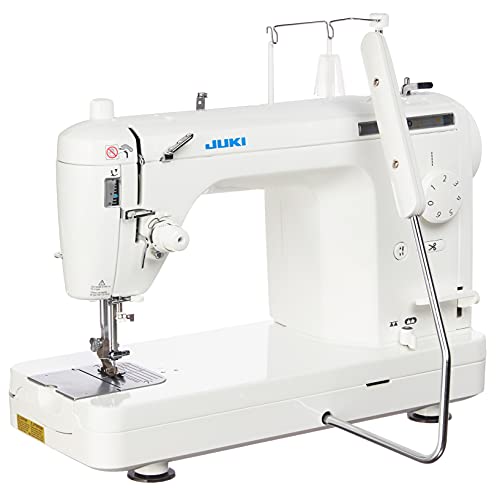
Low-Vibration Classic – JUKI TL-2000Qi
The JUKI TL-2000Qi offers a focused quilting setup with 1,500-stitches-per-minute performance, an included extension table, and an aluminum die-cast arm and bed. For quilting machines for small businesses, its low-vibration design and one-pedal operation support steady work on quilting, apparel, and home décor projects.
Best For: Small businesses wanting a fast, stable machine with a wide supported work area.
Pros:
- High-speed sewing reaches up to 1,500 stitches per minute.
- Aluminum die-cast construction is designed for low-vibration operation.
- Extension table provides additional workspace for quilts and larger fabrics.
- Automatic needle threader and LED lighting improve convenience.
Cons:
- Its feature set is more focused than that of computerized machines with many stitch options.
- The listed warranty is a five-year limited warranty.
The TL-2000Qi is a sensible production-oriented pick for users who prefer a straightforward, fast quilting machine with stability and an included extension table.
Feature-Rich Creative Option – SINGER C5980Q
The SINGER C5980Q emphasizes creative flexibility with 417 stitch applications, an LCD screen, speed control, and an included extension table. It is a useful choice among quilting machines for small businesses that need quilting functions alongside decorative, utility, stretch, and lettering options.
Best For: Creative businesses producing quilts, personalized projects, and varied sewing work.
Pros:
- Offers 417 stitch applications, including decorative, stretch, utility, and letter stitches.
- Extension table supports large quilts and fabrics.
- Programmable needle up/down and adjustable speed settings help with precision work.
- LCD display, metal frame, and LED lighting support convenient operation.
Cons:
- The listed 7.6-pound weight may provide less portability and stability than the heavier machines here.
- The notes do not specify a maximum stitching speed.
The C5980Q stands out when a small business values broad stitch variety and computerized convenience as much as dedicated quilting support.
Best All-Rounder – Janome 3160QDC-G
Janome 3160QDC-G Sewing and Quilting Machine with Bonus Quilt Kit! | Bonus Quilt Kit !
Check Price On AmazonFor small businesses seeking quilting machines for small businesses that can handle varied orders, the Janome 3160QDC-G combines quilting-focused accessories with convenient computerized controls. Its manageable 12.5-pound weight and included extension table also make it practical for studios, classes, and retreats.
Best For: Small-business makers who need one portable machine for quilting, patchwork, repairs, garments, and décor projects.
Pros:
- Built-in needle threader, automatic thread cutter, speed control slider, and start/stop button support efficient workflows.
- Superior Plus Feed System is designed to move fabrics smoothly and help prevent shifting or puckering.
- Includes a walking foot, 1/4-inch seam foot, free-motion darning foot, extension table, hard cover, and bonus quilt kit.
- Adjustable presser foot pressure and free-arm capability add project flexibility.
Cons:
- The 25-year warranty applies to mechanical parts, while electrical and labor coverage are shorter.
- Its broad feature set may be more than needed for a business focused exclusively on straight-line quilting.
The 3160QDC-G is a versatile choice when a small business needs quilting capability without giving up portability or general sewing functions. The included feet and workflow controls make it especially useful for varied, hands-on production.
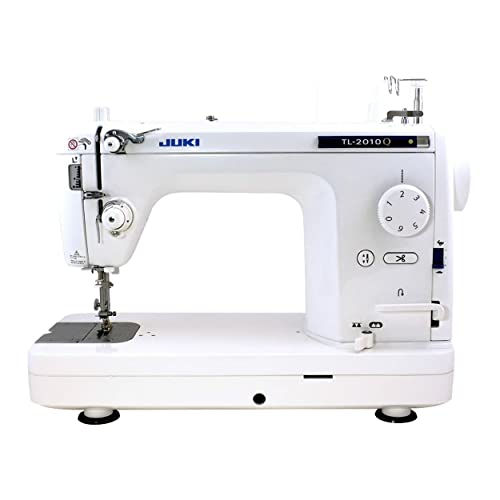
High-Speed Workhorse – Juki TL-2010Q
For quilting machines for small businesses where a dedicated, high-speed setup is a priority, the Juki TL-2010Q offers a semi-industrial format. Its aluminum construction and 17.2-kilogram weight suggest a substantially sturdier station than lightweight portable models.
Best For: Small quilting businesses that prioritize a semi-industrial machine format and a stable, durable work surface.
Pros:
- Designed as a high-speed sewing and quilting machine for production-oriented work.
- Semi-industrial construction suits users seeking a more substantial machine than a lightweight home model.
- Aluminum material and a 17.2-kilogram weight provide a solid, workroom-oriented profile.
Cons:
- At 17.2 kilograms, it is considerably less portable than lighter machines.
- The supplied details do not list included accessories, stitch options, or convenience features.
- Its 28-inch listed width and semi-industrial design may require dedicated workspace.
The TL-2010Q is most compelling for a fixed small-business workspace that values speed and substantial construction. Buyers needing portability or a clearly documented accessory package may prefer a lighter, more feature-detailed alternative.
Feature-Rich Starter – Brother CP100X
The Brother CP100X is a practical option for small businesses comparing quilting machines for small businesses with broad stitch capability and an approachable computerized design. Its 100 built-in stitches, metal frame, and included quilting accessories support a wide range of customer projects.
Best For: Small-business sewists who want versatile stitching, quilting accessories, and a relatively lightweight 10.5-pound machine.
Pros:
- Offers 100 built-in utility, decorative, and heirloom stitches plus eight auto-size buttonholes.
- Includes a wide table, quilting guide, walking foot, 1/4-inch piecing foot, quilting foot, and protective hard case.
- Metal frame construction and a fixed needle bar support work on projects from denim to heavy quilts.
- The improved one-step automatic needle threader is designed for easier threading.
Cons:
- The machine is intended for sale and use at 120 volts in the United States.
- Despite the included monogramming foot, the machine cannot monogram.
- Its 10.5-pound weight may provide less stability than a heavier semi-industrial machine for demanding production.
The CP100X balances a broad stitch library with useful quilting attachments and a portable footprint. It is a strong fit for businesses producing varied sewn goods, provided the U.S. voltage requirement matches the workspace.
Professional Speed Pick – Juki TL-2010Q
For small businesses handling frequent quilting orders, the Juki TL-2010Q emphasizes speed, stability, and workspace. Its extended arm and large work area help accommodate bulky quilts, while the solid metal construction is designed for consistent, professional-looking stitching.
Best For: Small quilting businesses that prioritize high-speed production and a durable, specialized quilting setup.
Pros:
- High-speed performance for efficient sewing and quilting workflows
- Large workspace and extended arm for quilts and larger fabric pieces
- Solid construction helps minimize vibration during operation
- Includes a comprehensive bonus accessory package
Cons:
- At 39 pounds, it is less convenient to move between work areas
- Its specialized, professional-grade design may be more machine than occasional users need
- Warranty service requires registration and retaining the original packaging
The TL-2010Q is a strong fit when production speed and stable handling matter more than portability. Its robust build and quilting-focused workspace make it particularly practical for businesses working on larger projects.
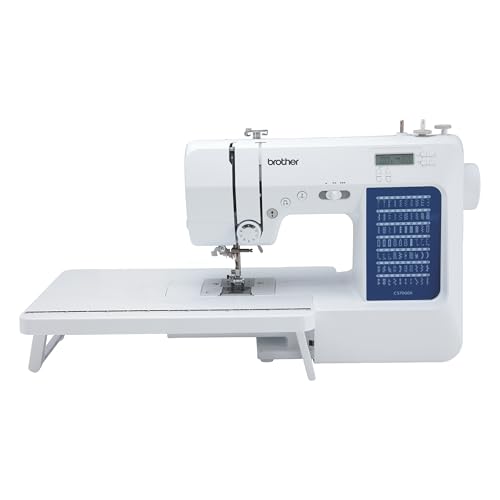
Versatile Value Pick – Brother CS7000X
The Brother CS7000X is a practical option for small businesses seeking quilting machines for small businesses with broad stitch flexibility and approachable controls. It combines 70 built-in stitches, an LCD display, a wide table, and a larger needle-to-arm workspace in a relatively compact 14-pound machine.
Best For: Small businesses that need an easy-to-use machine for quilting, general sewing, and varied decorative projects.
Pros:
- Offers 70 built-in utility, decorative, heirloom, and quilting stitches
- Includes a wide table, quilt guide, 10 feet, and protective hard case
- Automatic needle threader and jam-resistant drop-in bobbin simplify setup
- Metal frame and fixed needle bar support even stitching
Cons:
- Designed for 120-volt use in the United States
- Its 14-pound build may provide less heft than a heavier professional machine
- It has fewer built-in stitches than the Brother XR9550
With its useful accessory bundle and straightforward LCD controls, the CS7000X balances capability and portability. It is a sensible choice for businesses handling mixed sewing and quilting work rather than only high-volume production.
Feature-Rich Stitch Pick – Brother XR9550
The Brother XR9550 gives small businesses a broad selection of built-in stitch options without a complicated control layout. Its 165 stitches, LCD screen, wide table, and included quilting feet support businesses producing customized quilts, decorative work, and general sewing projects.
Best For: Small businesses that value stitch variety, computerized selection, and included quilting accessories.
Pros:
- Provides 165 built-in utility, decorative, heirloom, and alphanumeric stitches
- LCD display makes stitch and setting selection straightforward
- Includes a wide table, quilting feet, protective hard cover, and other accessories
- Automatic needle threader and drop-in bobbin support easier setup
Cons:
- Designed for 120-volt use in the United States
- The included hard-cover case requires leaving its protective Styrofoam in place
- Its 10.1-pound weight may feel less substantial for intensive heavy-fabric work
The XR9550 is compelling for businesses that differentiate their work through stitch variety and personalization. It offers more built-in options than the CS7000X while remaining relatively light and supported by Brother’s lifetime technical assistance.
How We Picked the Best Quilting Machines for Small Businesses
We focused on machines that can handle recurring production without sacrificing control or stitch consistency. Our selection includes high-speed models for long straight seams, computerized machines with broader stitch libraries, and lighter options suited to mixed sewing and quilting work. We also considered throat space, speed control, presser-foot compatibility, built-in convenience features, ease of maintenance, and the needs of newer businesses watching their equipment budget.
Because small studios often perform several types of work, versatility matters—but so does specialization. A machine designed around straight stitching may outperform a general-purpose model for piecing and long quilting sessions, while a computerized machine can be more useful for decorative details, garment work, and varied customer projects.
Quick Comparison
| Best For | Look For | Models in This Roundup |
|---|---|---|
| Fast piecing and production | High maximum speed, strong motor, knee lift, large work area | Brother PQ1600S, JUKI TL-2000Qi, Juki 2010Q, Juki TL-2010Q |
| Versatile studio work | Computerized controls, many stitches, automatic needle functions | Janome MC6650, SINGER C5980Q, Brother CP100X |
| Portable or budget-conscious setups | Manageable weight, simple controls, useful included accessories | Janome 3160QDC-G, Brother CS7000X, Brother XR9550 |
Key Buying Factors for Quilting Machines for Small Businesses
Speed and Stitch Control
High speed can increase output, but only when you can control it accurately. A speed slider, responsive foot pedal, needle-stop control, and smooth low-speed operation are valuable for corners, curves, and precision piecing.
Workspace and Fabric Handling
Check the throat space and included extension table, especially if you quilt larger layers. A stable machine with good feed-dog performance and an even presser foot helps prevent shifting and uneven seams.
Stitch Selection and Automation
Straight-stitch specialists are often ideal for piecing and free-motion quilting, while computerized models add zigzag, decorative, utility, and buttonhole functions. Automatic needle threading, thread cutting, needle positioning, and programmable settings can save time across repeated orders.
Durability, Service, and Operating Costs
For business use, consider construction quality, warranty coverage, replacement feet, bobbins, needles, and local service availability. A lower purchase price is less attractive if the machine is difficult to maintain or lacks accessories you use every day.
Who Should Buy Which Quilting Machines for Small Businesses?
Choose a high-speed JUKI or Brother straight-stitch model if your business mainly produces quilt tops, bindings, or repeated piecing work and you value speed and mechanical simplicity. Choose the Janome MC6650, SINGER C5980Q, or Brother CP100X if you need one machine for quilting plus decorative or general sewing tasks. The Janome 3160QDC-G, Brother CS7000X, and Brother XR9550 are better suited to newer businesses, mobile work, classes, or buyers who need broad functionality without moving immediately into a semi-industrial setup.
Before buying, estimate your weekly workload, measure your available workspace, and confirm that the machine supports your preferred quilting feet and techniques. The best Quilting Machines for Small Businesses are not necessarily the fastest or most expensive; they are the ones that fit your production style and remain comfortable to use for long sessions.