Choosing a bed canopy for an autistic child can make a bedroom feel more predictable, private, and comfortable. The right design may help reduce visual distractions, soften light, and create a consistent sleep or calming space.
We compared these 10 options by looking at sensory-friendly features, ventilation, coverage, setup, mattress compatibility, and practical details such as doors and portability.
Best 10 Bed Canopy for Autistic Child Picks for 2026
Best Flexible Setup
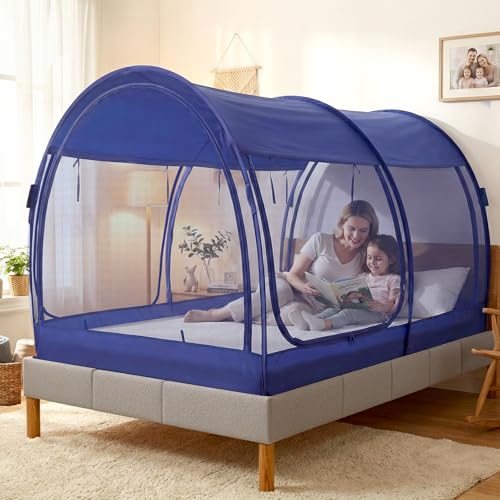
- Sets up in about a minute
- Four zippered doors and two windows
- Machine washable, portable design
Best For: Flexible indoor sleep, play, and privacy space
Best Imaginative Design

- Nine-planets space design
- Fits twin or bunk beds
- Storage pockets and breathable windows
Best For: Space-loving children who want a cozy play and sleep nook
Best for Light Sensitivity
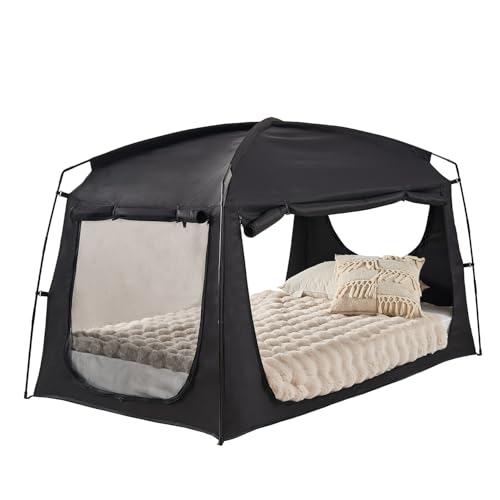
- Blocks up to 90% of listed light pollution
- Breathable mesh panels and three doors
- Includes pockets, travel bag, and one-year warranty
Best For: Light-sensitive sleepers needing a darker private space
Best Multi-Access Design

- Three doors with mesh and blackout layers
- Floorless design simplifies sheet changes
- Storage pockets, cable opening, and night-light hook
Best For: Private twin-bed spaces needing access and practical features
Most Adjustable Privacy

- Three zippered doors for flexible access
- Mesh and blackout layers reduce light
- Sturdy insert-rod design with storage bag
Best For: Twin beds needing customizable privacy and light control
Best Playful Twin-Bed Option

- Dual doors support easy entry and exit
- Blackout design creates a private sleep area
- Works with twin and bunk-bed setups
Best For: Indoor sleep and play spaces with a softer, themed design
Best Sensory-Space Design
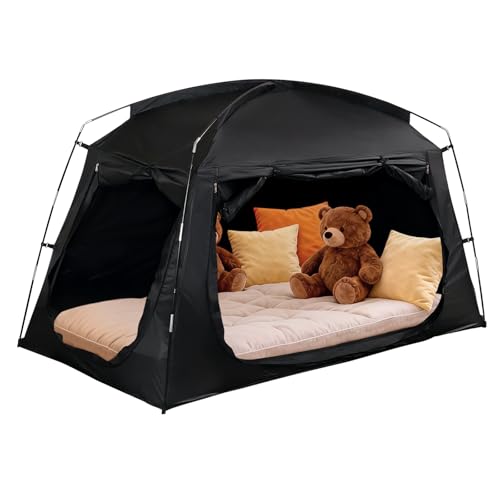
- Works on a twin bed or directly on the floor
- Designed for sensory breaks and relaxation
- Lightweight setup with two-sided access
Best For: Flexible indoor sensory, sleep, and calm-down spaces
Flexible Twin Space

- Two doors and two windows improve access and airflow.
- Fan pocket and storage pockets support daily comfort.
- Fits a twin mattress or can be used on the floor.
Best For: Children needing a flexible private space for sleep, reading, or play.
Light-Blocking Retreat

- Blackout opacity helps limit light during sleep.
- Two doors and two windows support access and airflow.
- Twin-bed and floor-tent use add flexibility.
Best For: Children who prefer reduced light and privacy in a shared bedroom.
Structured Privacy
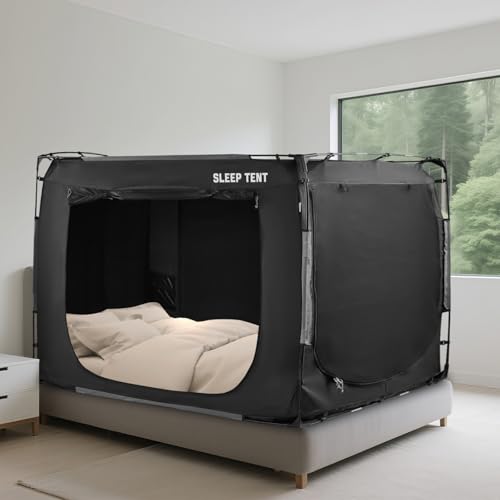
- Rectangular six-pole frame is designed for added stability.
- Three zippered doors provide flexible access.
- Mesh and blackout layers allow airflow and light adjustment.
Best For: Users wanting a stable twin enclosure with multiple doors and adjustable privacy.
Best Flexible Setup – LEEDOR Pop-Up Bed Tent
For families comparing a bed canopy for autistic child options, the LEEDOR pop-up tent provides a defined, portable space without attaching to a bed frame. Its breathable fabric, mesh panels, and four zippered doors offer flexible access and ventilation for sleep, play, or quiet time.
Best For: Families wanting a lightweight, free-standing twin-size tent that can also be used on the floor.
Pros:
- Pop-up frame sets up in about a minute and folds into a compact carrying bag.
- Four doors allow entry from multiple directions, while two windows support airflow.
- Breathable pongee and mesh construction is machine washable.
- Can be used on a twin mattress, independently on the floor, or as a daytime play tent.
Cons:
- Mattress is not included.
- Listed water resistance is absent, so it is intended for indoor use.
- The 75 x 39 x 47-inch size is primarily suited to twin beds.
Choose this model when quick setup, portability, and easy access matter most. Its open, breathable design may be preferable for children who do not like a more enclosed or heavily darkened sleep space.
Best Imaginative Design – Tiny Land Galaxy Bed Tent
The Tiny Land Galaxy tent combines a cozy twin-bed enclosure with a visual space theme. As a bed canopy for autistic child choice, it may appeal to children who find familiar themes and a dedicated private corner comforting, while its windows and adjustable flaps preserve visibility and ventilation.
Best For: Children who enjoy space-themed designs and need a versatile area for sleeping, reading, or imaginative play.
Pros:
- Nine-planets galaxy design adds an engaging, imaginative element.
- Fits over a twin or bunk bed and can also be placed directly on the floor.
- Breathable brushed fabric is machine washable.
- Includes two storage pockets, a hanging loop for lights, and windows for ventilation and parent visibility.
Cons:
- The themed pattern may not suit children who prefer a visually minimal environment.
- Mattress is not included.
- The supplied details list the fabric as not opaque, so it may not provide strong blackout.
This is a good fit when sensory comfort is connected to imaginative interests rather than total visual darkness. Check the child’s preference for patterns and confirm that the 77 x 40 x 46-inch dimensions suit the intended bed.
Best for Light Sensitivity – Blackout Sleep Bed Tent
For shoppers seeking a bed canopy for autistic child with stronger light control, this indoor sleep tent uses light-blocking fabric designed to eliminate 90% of light pollution. Mesh panels provide airflow, while the twin-size interior creates a private space for sleep or quiet activities.
Best For: Light-sensitive sleepers who may benefit from a darker, more enclosed twin-bed environment.
Pros:
- Light-blocking fabric is designed to reduce 90% of light pollution.
- Breathable mesh panels support airflow across seasons.
- Three doors, two windows, and two pockets add access and practical storage.
- Fiberglass frame, reinforced seams, travel bag, and a listed one-year warranty support regular use.
Cons:
- Care instructions call for dry cleaning or hand washing rather than machine washing.
- Mattress is not included.
- At about 6 pounds, it is heavier than the LEEDOR model and is listed for one occupant.
This model stands out when reducing ambient light is the priority. Before buying, consider whether the child prefers a blackout-style enclosure and whether the 78.7 x 41.3 x 47.2-inch footprint fits the room.
Best Multi-Access Design – Rectangular Blackout Bed Tent
This rectangular bed tent creates a dedicated personal area with breathable polyester-cotton fabric and an 80% blackout layer. For a bed canopy for autistic child, its floorless design, multiple doors, mesh ventilation, and storage features offer a practical balance of privacy and accessibility.
Best For: Children who want a private bed fortress with blackout coverage, ventilation, and organized storage.
Pros:
- Three large doors combine mesh and blackout layers for airflow and privacy.
- Floorless construction makes it easier to move the mattress and change sheets.
- Includes interior storage pockets, a charging-cable opening, and a night-light hook.
- Fiberglass poles provide a stable frame, and the cover can be hand or machine washed.
Cons:
- The listed 80% blackout level may allow more light than a near-total blackout tent.
- At 7.4 pounds, it is the heaviest option in this group.
- The supplied dimensions are 75 x 39 x 47 inches, so it is primarily suited to a twin-size setup.
Consider this tent if practical details such as accessible doors, storage, and easier sheet changes are as important as creating a secluded space. Its pink color and enclosed design should also be weighed against the child’s visual preferences.
Most Adjustable Privacy – Twin Blackout Bed Tent
For families comparing a bed canopy for autistic child use, this twin-size tent offers a structured private area with flexible light control. Its insert-rod design, three zippered doors, and two-layer door panels make it a practical choice for sleep, naps, or quiet time.
Best For: Children who benefit from a darker, enclosed twin-bed sleep space with multiple access points.
Pros:
- Three doors open from inside and outside for convenient access.
- Mesh and blackout panels provide ventilation and reduce light by 93%.
- Insert-rod construction with 8 mm fiber poles is designed for added stability.
- Includes a storage bag and can be folded away when not in use.
Cons:
- The mattress and floor are not included.
- At 8.1 pounds, it is heavier than some portable bed tents.
- Hand-wash care may require extra maintenance.
This is a strong option when darkness, privacy, and easy entry matter most. Families should confirm that the 75-by-39-by-47-inch dimensions fit the child’s twin bed and available room space.
Best Playful Twin-Bed Option – Blue Jean Privacy Bed Tent
This bed canopy for autistic child is designed as a soft indoor privacy tent for a twin bed or top bunk. The blackout fabric, dual doors, and included pennant banners give it both a sleep-focused enclosure and a playhouse-style feel.
Best For: Children who want a lightweight, enclosed twin-bed space that can also support imaginative play.
Pros:
- Two doors allow entry and exit from either side.
- Blackout opacity helps create a more enclosed sleep environment.
- Fits twin beds and is compatible with under-bunk or top-bunk setups.
- Compact fold and tool-free setup simplify storage and installation.
Cons:
- It is not water resistant and is intended for indoor use.
- Hand-wash care may be less convenient for frequent cleaning.
- The product details do not specify a separate mesh ventilation layer.
Choose this model if a child prefers a cozy, themed hideaway rather than a purely utilitarian canopy. Its 76-by-38.5-by-47-inch size should be checked against the bed frame, especially for bunk-bed use.
Best Sensory-Space Design – Calm-Down Bed Tent
Among options for a bed canopy for autistic child routines, this sensory bed tent is specifically described as a calm-down corner and private relaxation space. It can be used on a twin bed or floor, with a dark polyester enclosure and two-sided access.
Best For: Children who need a flexible indoor retreat for sleep, relaxation, sensory breaks, or quiet play.
Pros:
- Can be placed on either a twin bed or the floor.
- Designed as a private sensory space or calm-down corner.
- Two sides open from inside and outside for easier access.
- Lightweight 3.2-pound construction and approximately five-minute setup support portability.
Cons:
- It is not water resistant and is intended for indoor use.
- The fabric should not be machine washed.
- The supplied details list dry-clean-only care, which may be less convenient.
This is the most purpose-oriented choice for families seeking more than a bedtime enclosure. Its 75-by-39-by-47-inch dimensions and floor-compatible design make it adaptable, but caregivers should supervise use and select placement based on the child’s needs.
Flexible Twin Space – Ventilated Kids Bed Tent
If you are comparing a bed canopy for autistic child sleep routines, this twin-size tent offers a defined indoor space for sleep, reading, or quiet play. Its two doors, two windows, and breathable fan pocket provide multiple ways to manage access and airflow.
Best For: Children who may benefit from a private, camping-themed space on a twin mattress or floor.
Pros:
- Two doors and two windows support easy entry and ventilation.
- Two storage pockets help keep small essentials organized.
- Includes a breathable pocket designed to hold a mini fan.
- Works on a twin mattress or as a floor tent and assembles with two fiberglass poles.
Cons:
- Mattress is not included.
- It is not water-resistant or waterproof.
- The listed height is 49 inches, which may feel limited for some uses.
This is a practical choice when ventilation, accessible openings, and flexible floor-or-bed use matter more than outdoor weather protection. The machine-washable polycotton fabric may also simplify routine care.
Light-Blocking Retreat – Grey Twin Bed Tent
For families seeking a bed canopy for autistic child bedtime routines, this grey twin tent emphasizes privacy and light control. The blackout-style fabric, two doors, and two windows create a contained sleep or play area while preserving ventilation and easy access.
Best For: Children who are sensitive to morning light or benefit from a defined private area in a shared bedroom.
Pros:
- Blackout opacity helps reduce light and support daytime or morning sleep.
- Two doors and two windows make entry, exit, and ventilation easier.
- Fits a twin mattress and can also be used as a floor tent.
- Includes pennant banners, poles, and a washable polyester-cotton cover.
Cons:
- It is not water-resistant or waterproof.
- The darker fabric may reduce visibility inside when fully closed.
- Mattress is not listed as included.
This model stands out for light blocking and shared-bedroom privacy. Consider it when sleep timing, morning brightness, or a cozy enclosed playhouse feel are key priorities.
Structured Privacy – Three-Door Twin Sleep Tent
This twin-size option is a sturdy bed canopy for autistic child sleep or quiet-time routines, with a rectangular frame and layered door panels. Its mesh-and-blackout doors let you adjust airflow and light while maintaining a more defined private space.
Best For: Children or adults who need a spacious, stable twin-bed enclosure with multiple access points and adjustable light control.
Pros:
- Patented inserted-pole rectangular design is intended to resist collapsing or bending.
- Three zippered doors can be opened from inside or outside.
- Each door combines breathable mesh with a black light-reducing panel.
- Includes storage bags, a carry bag, fiberglass poles, and detailed instructions.
Cons:
- Assembly uses six poles and may be more involved than simpler tent designs.
- Care instructions call for hand washing.
- The listed weight is 3.36 kg, making it less lightweight for frequent moving.
Choose this model when structural stability, multiple entrances, and adjustable privacy are more important than the simplest setup. Its carry bag and washable fabric support storage and reuse indoors or while traveling.
How We Picked the Best Bed Canopy for Autistic Child
We focused on features that matter in a sensory-sensitive sleep environment rather than treating every canopy as interchangeable. Our comparison considered blackout or light-filtering coverage, mesh ventilation, the number and placement of doors, interior space, bed-size compatibility, and whether each design can work on a standard bed, bunk, floor mattress, or multiple bed sizes.
We also considered setup and daily use. A canopy that is difficult to assemble, hard to open from inside, or poorly matched to the mattress may become frustrating quickly. Because sensory preferences vary, we included both enclosed privacy tents and more flexible designs with breathable panels or multiple access points.
Quick Comparison
- Best for a traditional enclosed sleep space: Look for a twin-size tent with full coverage, blackout fabric, and dependable ventilation.
- Best for adjustable access: Models with three or four doors make it easier to enter, exit, change bedding, or provide reassurance.
- Best for imaginative bedrooms: A themed design, such as a galaxy canopy, may make the space more inviting while still providing privacy.
- Best for flexible placement: Floor-compatible or multi-size tents can work when a child changes rooms, beds, or sleeping arrangements.
- Best for bunk beds: Confirm the product’s dimensions and attachment method before buying; not every freestanding tent is suitable for elevated beds.
Key Buying Factors for a Bed Canopy for Autistic Child
Sensory Environment
Consider whether your child prefers darkness, partial privacy, enclosed spaces, or a clear view of the room. Blackout fabric can reduce light and visual stimulation, but some children may feel more comfortable with mesh windows or an openable door.
Airflow and Temperature
Breathable mesh panels and multiple openings help prevent the interior from feeling stuffy. Avoid blocking ventilation, and check that the canopy leaves enough clearance around the sleeping area. A canopy should never be used as a sealed enclosure.
Size and Fit
Measure the mattress, bed frame, and available clearance. Check whether the listed size refers to the mattress, the assembled tent, or both. Twin, full, queen, bunk, and floor setups are not automatically interchangeable.
Access and Safety
Doors that open easily from inside and outside are useful for independence and nighttime support. Inspect poles, seams, zippers, and attachment points regularly. Keep cords and loose fabric away from a child’s face, and follow the manufacturer’s age, assembly, and supervision guidance.
Who Should Buy Which Bed Canopy for Autistic Child?
Choose a fully enclosed blackout model if your priority is reducing light and visual distractions. Pick a design with mesh windows or several doors if airflow, visibility, and easy access matter more. A themed canopy may suit a child who responds positively to imaginative decor, while a neutral privacy tent can be better for a calm, low-stimulation room.
For children who move between beds or prefer floor sleeping, prioritize a flexible model that supports the intended setup. For a bunk bed, buy only after confirming precise measurements and compatibility. Ultimately, the best bed canopy for an autistic child is the one that matches the child’s sensory preferences, fits securely, and can be used safely and comfortably every day.