The right shoe cabinet can make a crowded entryway feel cleaner without sacrificing convenient access to everyday footwear. This roundup compares 10 options ranging from slim flip-drawer designs to tall, high-capacity organizers.
We focus on storage capacity, cabinet dimensions, shelf flexibility, construction, ventilation, and overall practicality so you can choose a model that fits both your space and your shoe collection.
Best 10 Shoe Cabinets Picks for 2026
Best Tall Shoe Cabinet

- 10 compartments hold up to 30 pairs
- Removable shelves fit taller boots
- Slim 12.6-inch-deep vertical design
Best For: Entryways and bedrooms needing high-capacity vertical storage
Best Enclosed Shoe Cabinet
Farmhouse-Inspired Three-Door Storage

- Stores about 30 pairs behind three doors
- Adjustable shelves and a taller shoe compartment
- Raised legs and a useful countertop
Best For: Entryways needing concealed, decorative shoe organization
Best Narrow Shoe Cabinet
Farmhouse Flip-Drawer Organizer

- Only 9.5 inches deep for tight spaces
- Two flip drawers conceal everyday footwear
- Removable dividers customize compartment space
Best For: Small entryways, foyers, and hallways
Best Covered Shoe Rack

- Ten tiers hold approximately 40 to 50 pairs
- Removable dust-resistant cover with four pockets
- Metal frame can be stacked and disassembled
Best For: Large collections, closets, dorms, and portable storage
Farmhouse Storage Pick
Homleke Farmhouse Shoe Cabinet
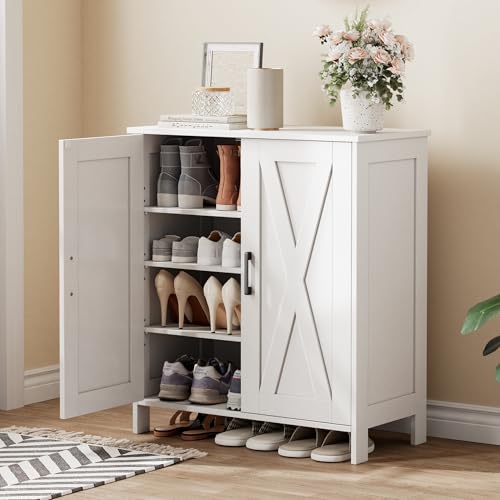
- Adjustable five-tier storage for 15+ pairs
- Barn doors with farmhouse styling
- Includes anti-tip hardware and tools
Best For: Families wanting spacious, enclosed shoe storage
Compact Style Pick

- Ultra-shallow 6.6-inch profile
- Two flip drawers conceal shoes
- Rattan doors and oak legs add style
Best For: Small apartments and limited shoe collections
Warm Walnut Pick

- Stores about 14 pairs of adult shoes
- Narrow profile with concealed flip drawers
- 80-pound top and anti-tipping device
Best For: Small entryways needing compact, concealed shoe storage
High-Capacity Choice

- Holds up to 24 pairs of shoes
- Eight levels across four flip drawers
- Adjustable panels and anti-tipping hardware
Best For: Households needing substantial hidden shoe storage
Design-Conscious Option

- Stores approximately 12–16 pairs
- Removable shelves for flexible organization
- Raised base and rear airflow aid cleaning
Best For: Stylish, narrow entryways needing adjustable storage
Best Tall Shoe Cabinet – Space-Saving 30-Pair Storage
If you need substantial storage without using much floor space, this tall shoe cabinet offers a practical vertical solution. Its 10 compartments can hold up to 30 pairs, while removable shelves accommodate taller boots.
Best For: Entryways, bedrooms, and homes that need tall, compact shoe storage.
Pros:
- Vertical design holds up to 30 pairs while measuring only 12.6 inches deep.
- Removable shelves can create room for boots and other taller footwear.
- Top compartment provides additional space for shoe boxes or baskets.
- Includes numbered parts, instructions, and an anti-tip kit.
Cons:
- At 73.6 inches tall, it may not suit rooms with limited vertical clearance.
- Engineered-wood construction has a listed maximum weight capacity of 20 pounds.
- Assembly is required.
This is a strong choice for shoppers prioritizing capacity and a small footprint. The clean white finish and curved details also make it more decorative than a basic open shoe rack.
Best Enclosed Shoe Cabinet – Farmhouse-Inspired Three-Door Storage
This enclosed shoe cabinet is designed to keep footwear hidden while adding useful storage to an entryway or hallway. Three doors, adjustable shelves, and a separate taller storage area make it flexible for different shoe sizes.
Best For: Shoppers who want concealed shoe storage with a decorative farmhouse look.
Pros:
- Holds about 30 pairs, depending on shoe size.
- Separate door area is suited to boots, heels, and other high-top shoes.
- Adjustable shelves help customize the six storage compartments.
- Raised legs, soft-closing hinges, and a drop-proof countertop add practical touches.
Cons:
- Its 43.8-inch width requires more horizontal space than a narrow cabinet.
- At 86.3 pounds, it may be difficult for one person to move or assemble.
- Assembly is recommended for two people.
With hidden storage and a finished black design, this cabinet works well when you want shoes out of sight rather than displayed. Its adjustable interior is especially useful for mixed footwear collections.
Best Narrow Shoe Cabinet – Farmhouse Flip-Drawer Organizer
For tight entryways and hallways, this narrow shoe cabinet combines hidden storage with a compact 9.5-inch depth. Its two flip drawers include removable dividers, so you can adjust the compartments for different footwear.
Best For: Small spaces that need concealed shoe storage with farmhouse styling.
Pros:
- Slim profile helps conserve floor space in narrow areas.
- Two flip drawers keep shoes hidden and easy to access.
- Removable dividers let you adjust the shoe compartments.
- Raised legs leave space underneath for slippers or a cleaning robot.
Cons:
- Four compartments offer less capacity than the taller and wider options in this roundup.
- The engineered-wood cabinet requires assembly.
- Its 31.5-inch width may limit storage for larger shoe collections.
This cabinet is a practical compromise for shoppers who value a slim footprint and hidden storage. The top fence provides a defined spot for keys, plants, or small decorations, while the included wall-anchoring device adds stability.
Best Covered Shoe Rack – 40-Pair Vertical Organizer
This covered shoe rack is a flexible alternative to a traditional shoe cabinet, offering tall, open shelving with protection from dust and dirt. Ten tiers hold approximately 40 to 50 pairs, and one tier can be removed to make room for long boots.
Best For: Large footwear collections, closets, dorms, and other spaces where capacity and portability matter.
Pros:
- Ten tiers provide storage for approximately 40 to 50 pairs.
- Removable cover helps protect shoes from dust and is easy to clean.
- Four cover pockets hold small accessories such as keys or ties.
- Metal tubing, stackable construction, and a 100-pound listed capacity support substantial storage.
Cons:
- The fabric cover does not provide the solid, furniture-like appearance of an enclosed cabinet.
- At 62.2 inches tall, it still requires considerable vertical clearance.
- Assembly is required, although the rack is designed to be disassembled for moving.
This is the capacity-focused pick for shoppers who need to organize many pairs on a budget-friendly rack format. Its removable cover lets you choose between dust protection and quick visibility, while the narrow depth keeps the footprint manageable.
Farmhouse Storage Pick – Homleke Farmhouse Shoe Cabinet
If you want shoe cabinets with a classic farmhouse look and room for a growing collection, the Homleke model combines enclosed storage with adjustable shelving. Its 27.6-inch width and five-tier interior are suited to entryways, hallways, bedrooms, or closets.
Best For: Households needing versatile, enclosed shoe storage for 15 or more pairs.
Pros:
- Three adjustable shelves accommodate different shoe sizes, including boots.
- Enclosed barn doors help keep shoes organized and out of sight.
- White finish, wood legs, and black U-shaped handles add farmhouse style.
- Includes an anti-tipping wall-anchoring device and assembly tools.
Cons:
- At 13.8 inches deep, it needs more floor depth than slim hallway cabinets.
- Assembly is required.
This is a practical choice when storage capacity and decorative appeal matter more than a minimal footprint. The adjustable interior also makes it more flexible than fixed-compartment shoe cabinets.
Small-Space Organizer – Nicetree 3-Drawer Shoe Cabinet
Among shoe cabinets for narrow entryways, the Nicetree stands out with a 9.45-inch depth and three flip-down drawers. It offers enclosed storage for an estimated 18 to 24 pairs while keeping the cabinet footprint relatively slim.
Best For: Compact hallways, small mudrooms, and entryways that need high-capacity vertical storage.
Pros:
- Three adjustable shelves help organize sneakers, heels, flats, and everyday shoes.
- Narrow profile fits tight spaces, while the 48.43-inch height uses vertical room.
- Textured white finish, gold handles, and tapered base suit several decor styles.
- Includes hooks for keys, bags, and umbrellas, plus an anti-tip device.
Cons:
- The anti-tip installation requires drilling into the wall.
- Assembly is required, although a video guide and manual are provided.
This cabinet is a strong space-conscious option for shoppers who need substantial capacity without a wide or deep footprint. Its hooks add useful entryway organization beyond shoe storage.
Compact Style Pick – VEVOR Rattan Shoe Cabinet
For shoppers seeking compact shoe cabinets with decorative character, the VEVOR model pairs a 6.6-inch-deep profile with two flip drawers and arched rattan doors. Its small footprint is designed for narrow hallways, apartments, and homes with smaller shoe collections.
Best For: Singles or couples who want stylish, shallow shoe storage for a limited number of pairs.
Pros:
- Very shallow design fits narrow spaces and small apartments.
- Arched rattan doors, oak legs, and gold handles create a distinctive look.
- Thickened panels and included anti-tipping devices support stability.
- Two flip drawers conceal shoes and help keep the entryway tidy.
Cons:
- The shallow, two-drawer design is intended for smaller shoe collections.
- Assembly is required.
The VEVOR is best when preserving floor space and adding visual interest are top priorities. Its 80-pound stated maximum weight capacity and wall-safety hardware provide added reassurance for everyday use.
Warm Walnut Pick – Modern 2-Drawer Shoe Cabinet
This narrow shoe cabinet combines a warm walnut finish with concealed flip-drawer storage, making it a practical choice for entryways with limited floor space. Its two compartments hold about 14 pairs of adult shoes, while the thickened top provides useful space for keys, wallets, or decor.
Best For: Small entryways needing concealed shoe storage and a sturdy display surface.
Pros:
- Stores about 14 pairs of adult shoes, depending on size and style.
- Narrow 9.4-inch depth helps conserve floor space.
- Thickened top supports up to 80 pounds.
- Includes an anti-tipping device and numbered assembly parts.
Cons:
- Large boots may require removing the center divider.
- Its two-drawer layout offers less capacity than taller four-drawer cabinets.
Choose this model if you want a compact shoe cabinet with an attractive walnut look, dust-protective storage, and a particularly useful top surface. Wall anchoring is recommended for added stability.
High-Capacity Choice – White 4-Drawer Shoe Cabinet
This four-drawer shoe cabinet is designed for shoppers who need more organized storage without a deep footprint. Its eight storage levels can hold up to 24 pairs, with adjustable or removable middle panels to accommodate heels, sneakers, flats, and some boots.
Best For: Larger households that want high-capacity, hidden shoe storage in a slim cabinet.
Pros:
- Offers up to 24 pairs of storage, depending on shoe size and style.
- Four flip-out drawers provide eight storage levels.
- Adjustable or removable panels help fit different shoe shapes.
- Includes an anti-tipping device and detailed assembly instructions.
Cons:
- At 47.24 inches wide, it requires more wall space than compact two-drawer options.
- Assembly may be easier with two people or power tools.
This is the strongest capacity-focused option in the group. Its 9.45-inch depth keeps the cabinet relatively slim, while the white finish and embedded handles suit a range of modern rooms.
Design-Conscious Option – Fluted Walnut Shoe Cabinet
This fluted walnut shoe cabinet adds decorative texture while keeping everyday footwear hidden behind two flip drawers. Removable shelves let you adjust the interior for different shoe sizes, and the 9.4-inch depth works well in narrow foyers, hallways, and entryways.
Best For: Buyers who want compact shoe storage with a distinctive fluted front and easy-clean features.
Pros:
- Stores approximately 12–16 pairs of shoes.
- Removable shelves accommodate different shoe sizes and styles.
- Raised 4.72-inch clearance makes cleaning underneath easier.
- Includes adjustable feet, rear airflow, and an anti-tipping device.
Cons:
- Two drawers provide less capacity than the four-drawer alternative.
- The engineered-wood cabinet requires assembly.
Consider this model when appearance and practical maintenance matter as much as storage. The fluted walnut doors, black handles, airflow-focused back, and raised base give it a polished yet functional entryway profile.
How We Picked These Shoe Cabinets
We selected these Shoe Cabinets for the storage problems they solve in real homes: limited floor space, visible clutter, mixed shoe sizes, and the need for an organized drop zone near an entrance. The lineup includes tall open or covered racks, narrow cabinets with flip drawers, and farmhouse- or modern-style pieces that can complement existing furniture.
When comparing options, consider stated capacity carefully. A cabinet’s advertised pair count may assume smaller low-profile shoes, while boots, high-tops, and bulky sneakers require more clearance. We also looked for adjustable shelves, stable construction, useful door layouts, and designs that make frequently worn shoes easy to reach.
Quick Comparison
| Best For | Look For | Most Suitable Design |
|---|---|---|
| Maximum capacity | Many tiers and vertical storage | Tall rack or 10-tier cabinet |
| Small entryways | Narrow depth and flip drawers | Slim freestanding cabinet |
| Family footwear | Multiple compartments and adjustable shelves | Three- or four-drawer cabinet |
| Decor-focused rooms | Enclosed storage and coordinated finishes | Farmhouse, fluted, walnut, or rattan-door design |
| Fast everyday access | Open shelves or simple doors | Open shoe rack or wide-door cabinet |
Key Buying Factors for Shoe Cabinets
Capacity and Compartment Size
Count the shoes you need to store now, then allow room for seasonal additions. Check internal shelf height rather than relying only on the listed pair count, especially if you own boots, heels, or athletic shoes.
Width, Depth, and Entryway Clearance
Measure the available wall space, baseboards, door swing, and walking path before ordering. Slim flip-drawer cabinets can preserve circulation in narrow halls, while deeper racks may provide easier access but take up more floor space.
Adjustability and Organization
Adjustable shelves are valuable when a collection includes different shoe types. Separate compartments can keep pairs together, while taller tiers or removable shelves may accommodate boots and oversized footwear.
Enclosure, Ventilation, and Maintenance
Closed doors hide clutter and reduce visible dust, but shoes should be reasonably dry before storage. Open racks offer better airflow and faster access. Look for wipe-clean surfaces and a layout that does not trap damp footwear.
Stability and Assembly
Review the dimensions, materials, included hardware, and assembly requirements. Tall cabinets and narrow units should be placed on a level surface and secured according to the manufacturer’s instructions, particularly in homes with children or pets.
Who Should Buy Which Shoe Cabinets?
Choose a tall, multi-tier organizer if capacity is your main priority and vertical wall space is available. A narrow flip-drawer cabinet is better for apartments, compact hallways, and anyone who wants shoes concealed behind a relatively shallow profile. Families or larger households should prioritize several drawers, adjustable shelving, and a generous stated capacity.
If appearance matters as much as storage, farmhouse barn-door styles, fluted fronts, walnut finishes, and rattan details can function more like entryway furniture. For frequently worn footwear, an open rack or easily accessible door layout may be more convenient than a fully enclosed cabinet. Whichever style you choose, measure first, verify the usable compartment dimensions, and reserve space for ventilation and safe access.